The Challenges of E/M Coding: Mastering Evaluation and Management in 2026
Terry Stagg
April 16, 2026
If you ask any veteran medical coder which section of the CPT book keeps them up at night, the answer is almost always Evaluation and Management (E/M).
While surgery coding is about "what was done" and diagnosis coding is about "what was found," E/M coding is about the cognitive work of the provider. It captures the value of the physician’s brain—the time they spend thinking, talking, and deciding.
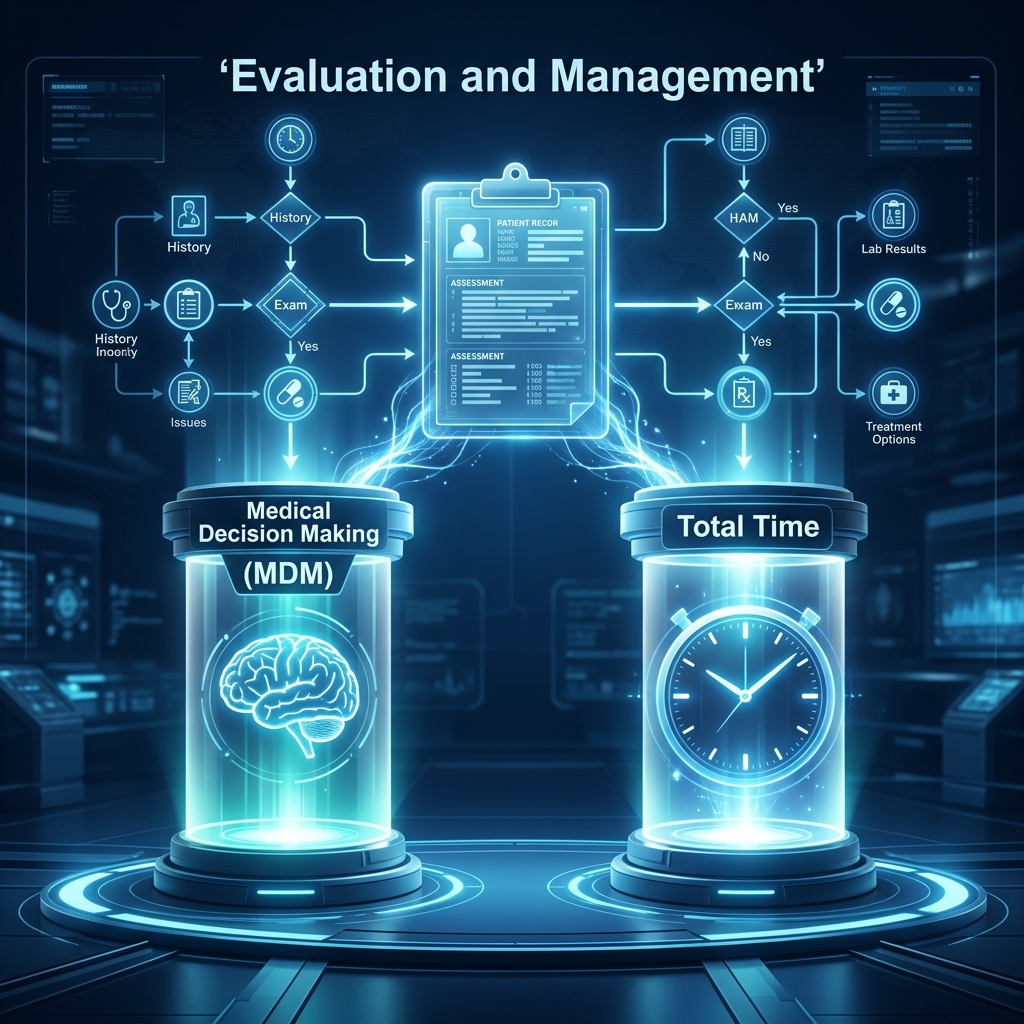
The landscape changed significantly with the massive overhauls that culminated in the 2026 guidelines. Today, E/M coding is centered on two pillars: Medical Decision Making (MDM) and Total Time.
1. The Death of "Bullet Counting"
Prior to these reforms, coders had to count "bullets" in a patient’s history and physical exam. This led to "note bloat"—massive, templated paragraphs of irrelevant information that doctors added just to justify a code.The 2026 Rule: History and Physical Exam are still required as "medically appropriate," but they no longer determine the code level. This shift allows doctors to focus on the patient instead of the paperwork.
2. Pillar One: Medical Decision Making (MDM)
MDM is the "heart" of the E/M visit. To determine the level of MDM, you must evaluate three specific components. You only need to meet the requirements for two out of these three to qualify for a level.Component A: Number and Complexity of Problems Addressed
Component B: Amount and Complexity of Data Reviewed
This captures the effort the doctor spends looking at outside information:Component C: Risk of Complications and/or Morbidity
3. Pillar Two: Time-Based Coding
In 2026, "Time" is defined as the Total Time spent by the physician on the date of the encounter. This includes:Coding Pro-Tip: You cannot count the time spent by clinical staff (nurses or MAs). It must be the provider’s time!
4. The "Choice" of Level Selection
For most E/M visits, you can choose to code based on MDM OR Total Time—whichever results in the most accurate (and often higher) level.5. Common E/M Codes to Know
The vast majority of your work will live in the 99202–99215 range for Office/Outpatient visits.6. The 2026 Updates: Beyond the Office
7. Why E/M is the "Audit Magnet"
Because E/M levels directly impact revenue, insurance auditors look at these codes first. The #1 reason for a "downcode" is insufficient documentation of MDM.The Golden Rule: If the doctor doesn't write down their thought process, it didn't happen in the eyes of the auditor.
Conclusion: Embracing the Cognitive Shift
E/M coding in 2026 is a reflection of modern medicine. It rewarding the doctor’s expertise rather than their ability to check boxes. Mastering E/M means you are no longer just a "counter"—you are a clinical analyst.In our next post, we’re going to look at the other side of the coin: Surgical Coding and the CPT 10000–60000 series.

Terry Stagg
With 36 years in healthcare and 27 years as a Director of Information Systems, Terry Stagg bridges the gap between clinical documentation and the revenue cycle. He is a technology specialist and hospital data expert.