Beyond the CPT: Mastering HCPCS Level II and the 'Stuff' of Medicine
Terry Stagg
April 18, 2026
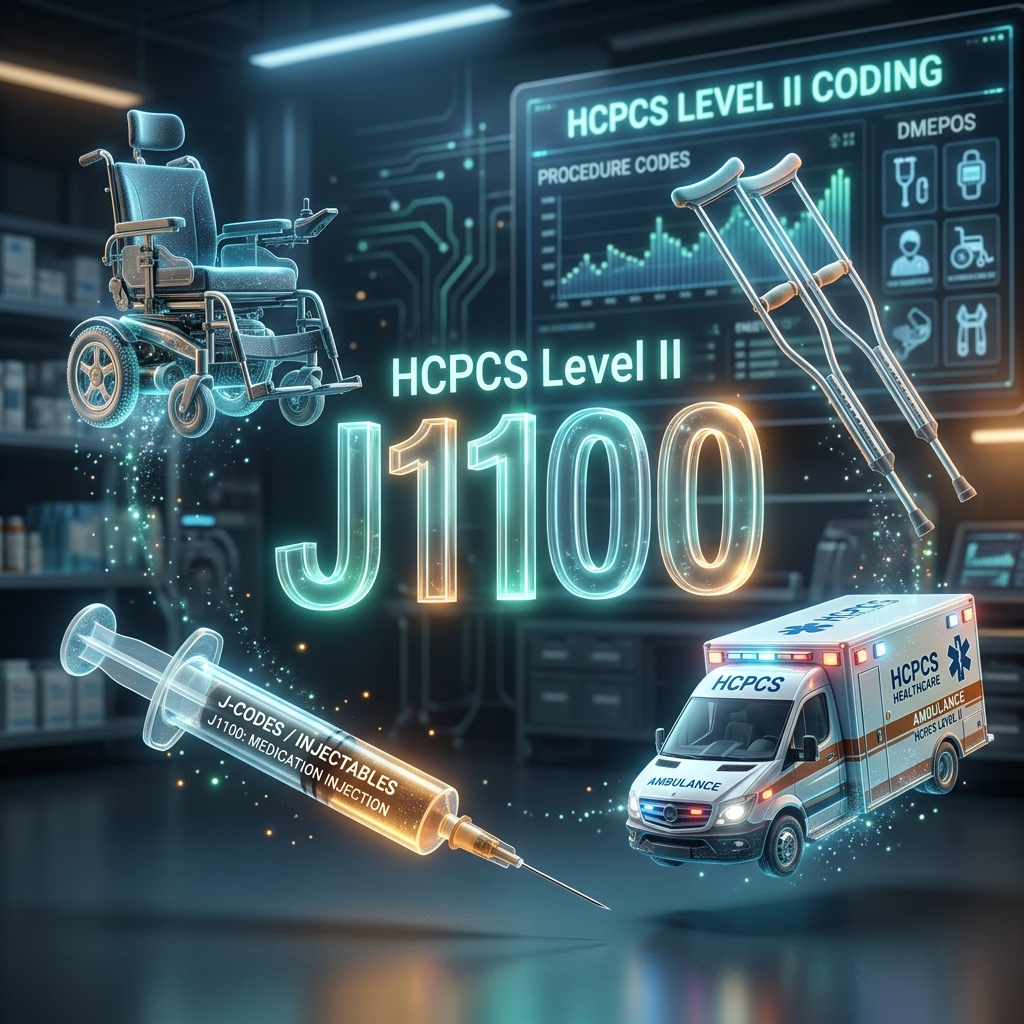
While the CPT book covers procedures, there is an entire secondary universe of coding that beginners often overlook: HCPCS Level II. Maintenance by CMS, this code set describes supplies, medications, and services not found in the CPT.
In this guide, we’ll explore the Alphanumeric world of HCPCS and the codes every student needs to master in 2026.
1. The Anatomy of an HCPCS Level II Code
HCPCS Level II codes are alphanumeric, starting with a single letter (A through V) followed by four numbers. The letter tells you the category:2. The Power of J-Codes: Coding for Drugs
For outpatient facility coders, J-Codes represent drugs that cannot be self-administered, such as IV antibiotics or chemotherapy injections.The Dosage Trap: A single HCPCS code often represents a specific dosage (e.g., 1 mg). If a physician administers 4 mg, you must bill 4 units of that code. Failing to multiply units is a leading cause of lost revenue in high-volume clinics.
3. Durable Medical Equipment (DME) and "E-Codes"
Coding for DME requires high documentation standards. The documentation must prove medical necessity—that the patient has a functional limitation requiring the equipment for safety or mobility.4. Ambulance and Transportation (A-Codes)
Ambulance coding involves both the level of care (e.g., Advanced Life Support) and the distance (Ground mileage). You must also code the "Origin" and "Destination" using specific modifiers like -RH (Residence to Hospital).5. National Modifiers: Adding Granular Detail
HCPCS Level II has its own set of two-letter modifiers:6. The "G-Codes" and "H-Codes": Quality and Mental Health
7. Why Students Struggle with HCPCS
Think of HCPCS as the "Inventory" book. If it’s an object you can touch (a drug, a bandage, a splint), or a service defined by a government mandate, look in HCPCS.8. The 2026 Update: Digital Health Supplies
HCPCS has expanded to include Remote Patient Monitoring (RPM) supplies, such as cellular-connected blood pressure cuffs and glucose monitors that transmit data directly to the office.Conclusion: Completing the Financial Picture
You cannot code a medical encounter fully without HCPCS. If you only code the surgery (CPT) but miss the surgical tray or the post-op injection (HCPCS), you aren't telling the full story. Mastering HCPCS Level II turns you into a true Revenue Cycle Expert.In our next post, we’re going to look at the Resume and Interview phase—the 5 skills every entry-level coder needs to highlight to land their first job.

Terry Stagg
With 36 years in healthcare and 27 years as a Director of Information Systems, Terry Stagg bridges the gap between clinical documentation and the revenue cycle. He is a technology specialist and hospital data expert.