Remote vs. On-Site: The Reality of Work-from-Home Coding Roles in 2026
Terry Stagg
April 15, 2026
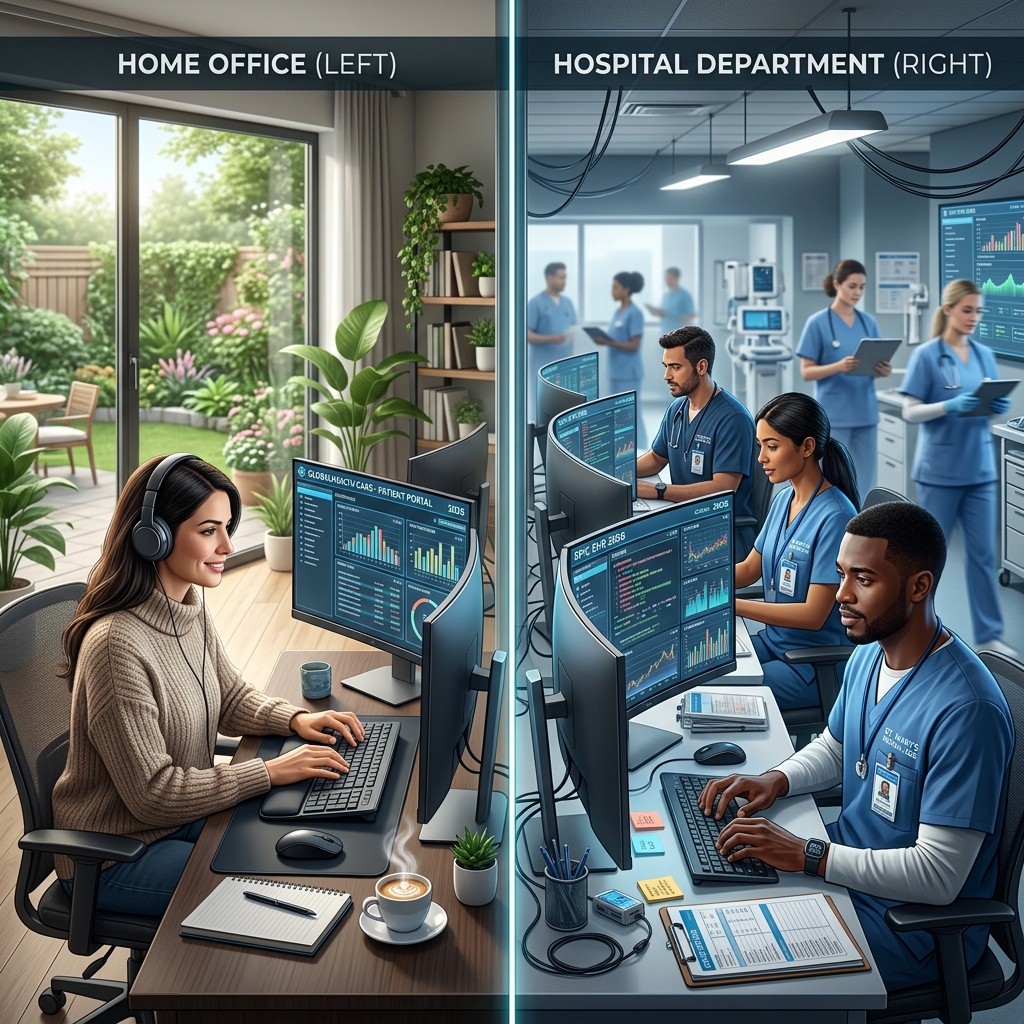
For decades, the image of a medical coder was someone tucked away in the "basement" of a large hospital, surrounded by stacks of paper charts. Fast forward to 2026, and the landscape has shifted entirely. With the universal adoption of Electronic Health Records (EHR), medical coding has become one of the premier "work-from-home" professions in healthcare.
However, "remote work" isn't a one-size-fits-all solution. As you prepare to enter the field, you need to understand the nuances of the modern job market.
In this guide, we’ll break down the pros, cons, and logistical requirements of both paths.
1. The Remote Revolution: Life in the Home Office
Working remotely as a coder is often the "dream" for students. It offers flexibility, eliminates the commute, and allows for a customized work environment.The Advantages of Remote Coding
The Challenges of Remote Coding
2. The On-Site Reality: Hospital and Clinic Floor
While remote work is popular, on-site roles are far from extinct. High-level trauma centers often prefer their coding teams to be physically present.The Advantages of On-Site Coding
The Challenges of On-Site Coding
3. The Hybrid Model: The "Best of Both Worlds"
In 2026, the Hybrid Model has emerged as the most popular choice. You might work on-site two days a week for meetings and physician education, and work from home the other three days for "production" coding.4. Technical Requirements for the Remote Coder
Most employers have strict "Home Office Requirements" to ensure HIPAA compliance and productivity.5. Finding Your First Remote Job
Entry-level coders often start on-site to ensure they have a solid grasp of the guidelines.6. The "Soft Skills" of the Remote Coder
Proactive communication—sending a weekly summary of your productivity—builds the trust necessary for a successful remote career.Conclusion: Your Career, Your Choice
There is a place for you in medical coding whether you are a "social butterfly" or a "focused hermit."In our next post, we are going to dive back into the technical side: The Challenges of E/M Coding (Evaluation and Management). Masters this, and you’ll be a high-value asset in any doctor’s office.

Terry Stagg
With 36 years in healthcare and 27 years as a Director of Information Systems, Terry Stagg bridges the gap between clinical documentation and the revenue cycle. He is a technology specialist and hospital data expert.