Back to Blog
Audit Audit
12 min read
Coding for Social Determinants of Health (SDOH): Why "Z-Codes" Matter More Than Ever
Terry Stagg
May 4, 2026
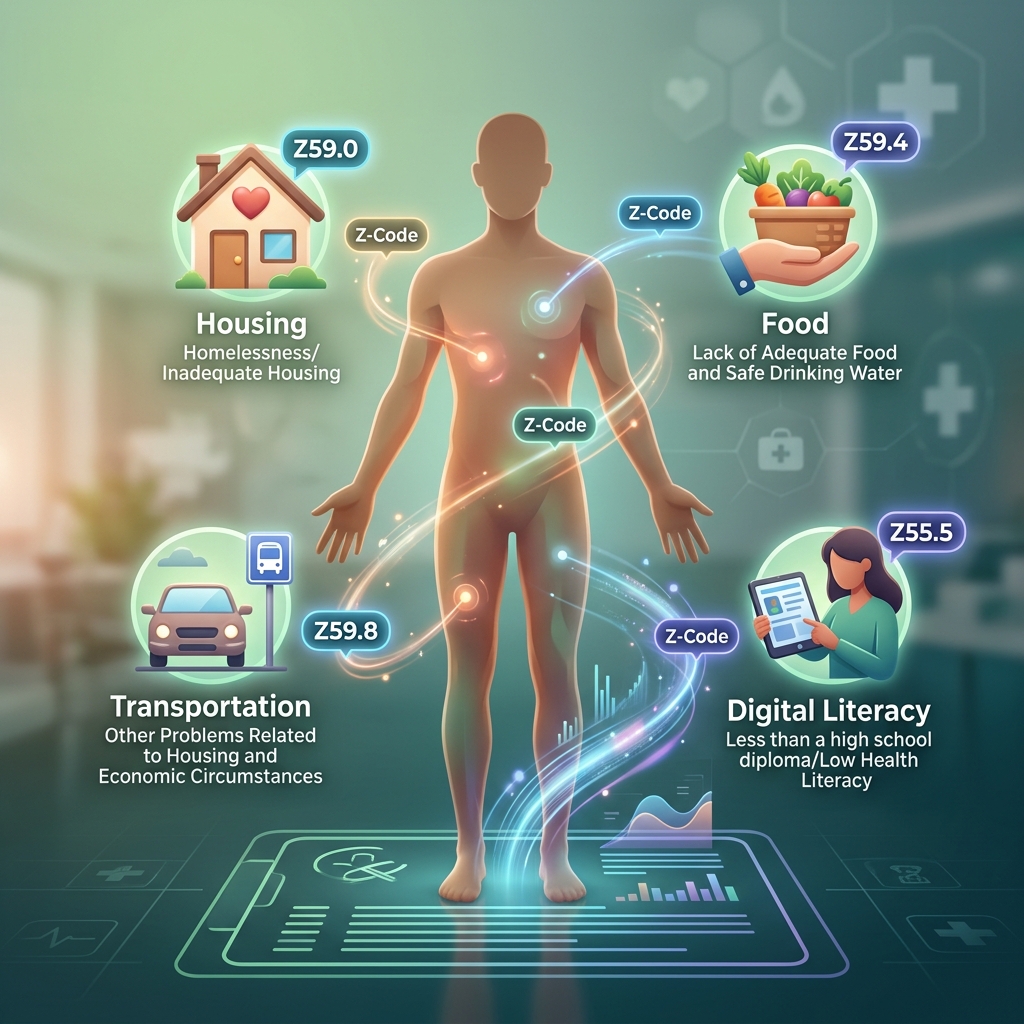
In 2026, a patient’s zip code is often a better predictor of health than their genetic code. This has led to the elevation of Social Determinants of Health (SDOH) in the ICD-10-CM manual, primarily in the Z55–Z65 category. These are the "hidden champions" of modern coding.
1. What are Social Determinants of Health (SDOH)?
SDOH are non-medical factors influencing health outcomes—the conditions in which people live and age.2. The Power of the "Z-Code"
Z-codes show the complexity of a case beyond the clinical diagnosis:3. The 2026 Rule Change: Non-Physician Documentation
One of the most important rules: You can code SDOH based on documentation from Case Managers, Social Workers, and Nurses. The social worker’s note is often the "Gold Mine" for these codes.4. Risk Adjustment and HCC
If you fail to code SDOH factors like food insecurity (Z59.41), the hospital looks "healthier" on paper than it is. This results in underfunding and penalties for high readmission rates caused by social factors, not poor medical care.5. Medical Necessity and Z-Codes
Z-codes provide the "Why" behind expensive treatments. Coding a social barrier like "Non-compliance due to lifestyle" (Z72.89) justifies more intensive interventions to insurance payers.6. The "Hidden" SDOH: Digital Literacy
7. Ethics and Sensitivity
SDOH data is sensitive.8. AI and SDOH Extraction
AI tools in 2026 are excellent at picking up "Social Cues" in nursing notes. Your role is to validate these flags, acting as the Human Compass that ensures social factors receive the clinical weight they deserve.Conclusion: Coding the "Whole Person"
By mastering SDOH and Z-codes, you move from being a technical coder to a Healthcare Data Scientist, helping to fix the system, not just the symptoms.Next in our collection: Cardiology Coding Essentials: A Guide to Complex Heart Procedure Codes.

Terry Stagg
CPC, COC, RHIA • Author
With 36 years in healthcare and 27 years as a Director of Information Systems, Terry Stagg bridges the gap between clinical documentation and the revenue cycle. He is a technology specialist and hospital data expert.