Telehealth Billing in 2026: How Virtual Visits Changed the Rulebook
Terry Stagg
April 28, 2026
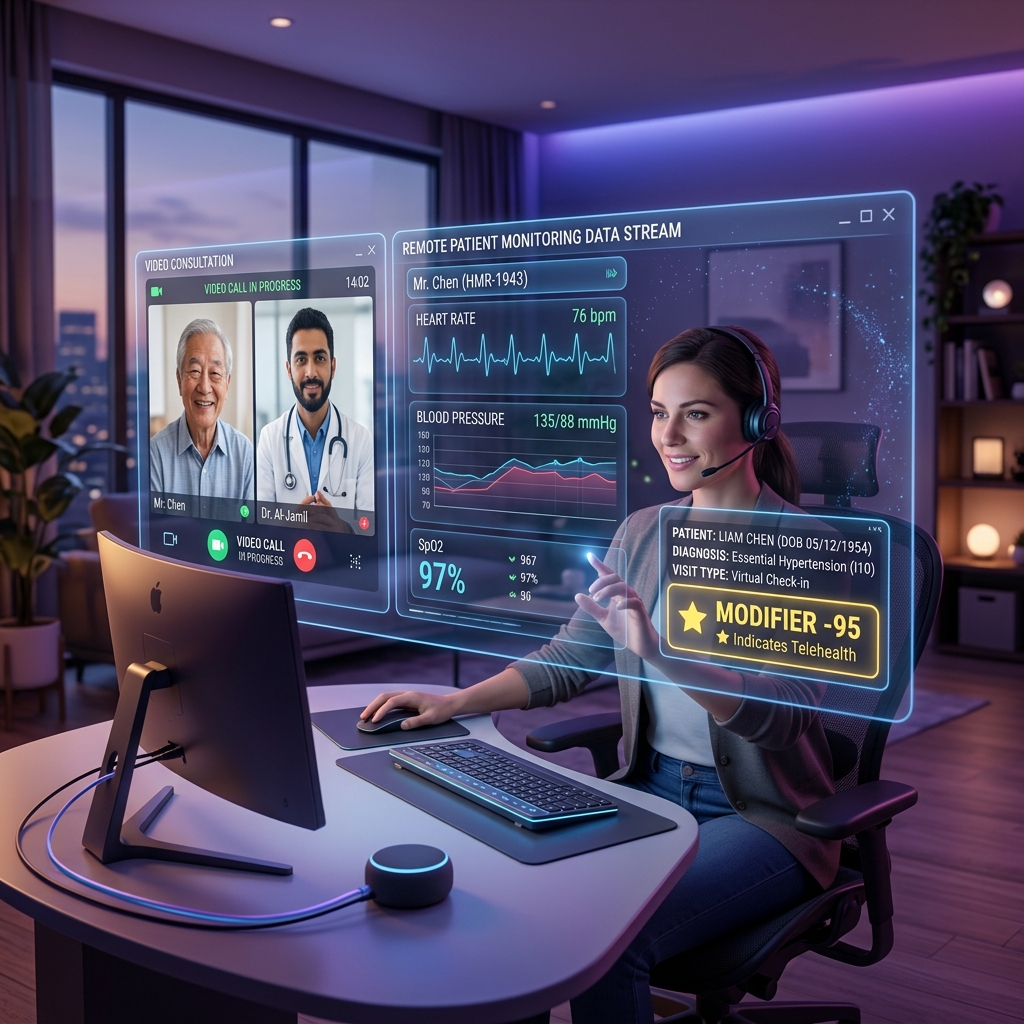
If there is one area of healthcare that has seen a permanent "seismic shift," it is Telehealth. In 2026, a medical coder is just as likely to process a "Video Visit" or a "Remote Patient Monitoring" session as a traditional in-person exam.
However, for a coder, telehealth is not just "medicine through a screen." It’s a complex landscape of modifiers, "place of service" codes, and strict regulations.
1. The Three Pillars of Virtual Care
In the modern coding manual, Telehealth is an umbrella term for three distinct services:2. The Modifier Masterclass: -95, -GT, and -FQ
The modifier is the most important part of the telehealth claim.3. Place of Service (POS) Codes
4. The "Digital Divide": Audio-Only vs. Video
Rules for audio-only visits are strict. If video fails, you must document the "Technical Failure" and use appropriate codes (like 99441–99443). You must also verify Telehealth Consent in the doctor's note.5. Remote Patient Monitoring (RPM)
RPM is a monthly cycle, not a one-time code:6. Fraud, Waste, and Abuse
Telehealth is a high-priority target for the OIG. As a coder, you must ensure:7. The Future: "AI-Scribes" in Virtual Visits
By 2026, AI tools often draft telehealth notes automatically. Your job has shifted to editing the AI’s logic. You must ensure the evaluation supported by the AI was actually performed and not just a passing comment.Conclusion: Embracing the Virtual Clinic
Telehealth is no longer a specialty niche; it is a core competency. By mastering modifiers, POS codes, and RPM logic, you make yourself indispensable to the modern digital practice.Next in our collection: The Future of Auditing: Why AI-Driven Audits Mean You Need to Be More Precise Than Ever.

Terry Stagg
With 36 years in healthcare and 27 years as a Director of Information Systems, Terry Stagg bridges the gap between clinical documentation and the revenue cycle. He is a technology specialist and hospital data expert.